BIOLAIGY briefing
The Vision of Industry 4.0
Industry 4.0 — smart manufacturing — is the ongoing digital transformation of industry: converging physical and digital technologies for real-time decisions, flexibility, and agility. This briefing walks the pieces that matter to BIOLAIGY: advanced sensors, human-robot collaboration, augmented reality, and AI-driven electromagnetic control.
01 — Introduction
The horizon of Industry 4.0
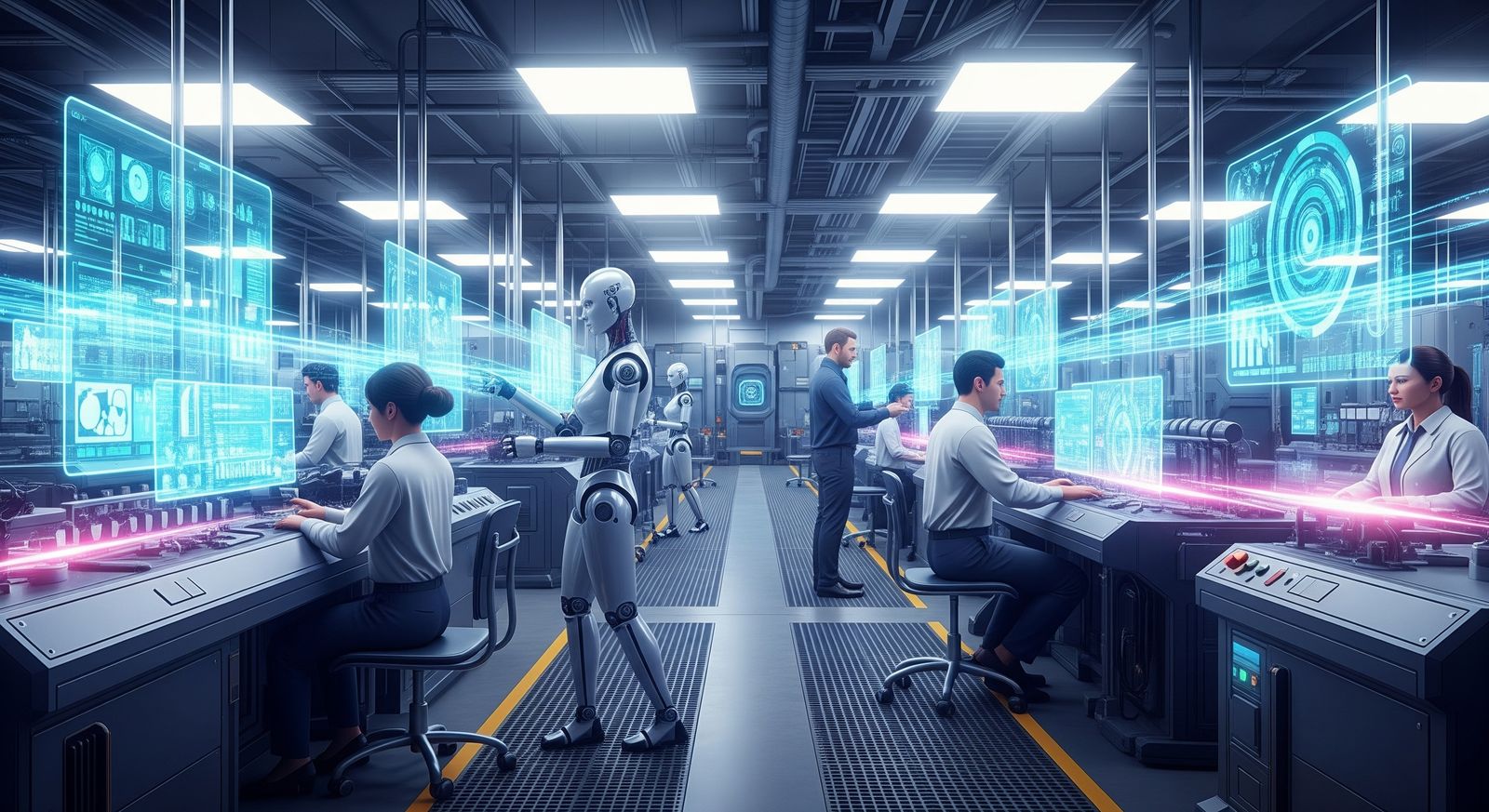
Industry 4.0 is more than automation. It is a shift toward intelligent, interconnected systems that learn and adapt autonomously — smart factories that respond in real time to conditions on the floor and demand in the market. The pillars below are its interconnected foundations.
Key pillars
🌐Internet of Things
Connecting machines and devices for data exchange.
IoT equips machines with sensors and network addresses so they can connect and exchange large volumes of data, enabling real-time monitoring and control across the plant.
☁️Cloud computing
Storage, processing, and operational integration.
The cloud provides scalable infrastructure to store and process the data that IoT devices generate, and to integrate it across business operations.

🤖AI & machine learning
Analysis for insight and automation.
AI and ML analyse operational data to generate insight — giving visibility, predictability, and automation across processes and business decisions.
⚡Edge computing
Local processing for speed and security.
Edge computing processes data close to its source, cutting latency and reducing exposure for real-time applications.
🛡️Cybersecurity
Protecting connected systems and data.
As operational technology and information technology converge, cybersecurity becomes essential to protect interconnected systems from attack.
🔗Digital twins
Virtual models for simulation and optimisation.
Digital twins are virtual replicas of physical assets and processes, used for simulation, optimisation, and predictive analysis before changes touch the real line.
02 — Advanced sensors
The smart factory’s nervous system
Sensors provide the raw data for real-time monitoring, process optimisation, quality control, and predictive maintenance. Below: the common sensor types, the sense of touch, and how sensor data drives maintenance.
General industrial sensors
A diverse array of sensors monitor physical parameters across the plant.
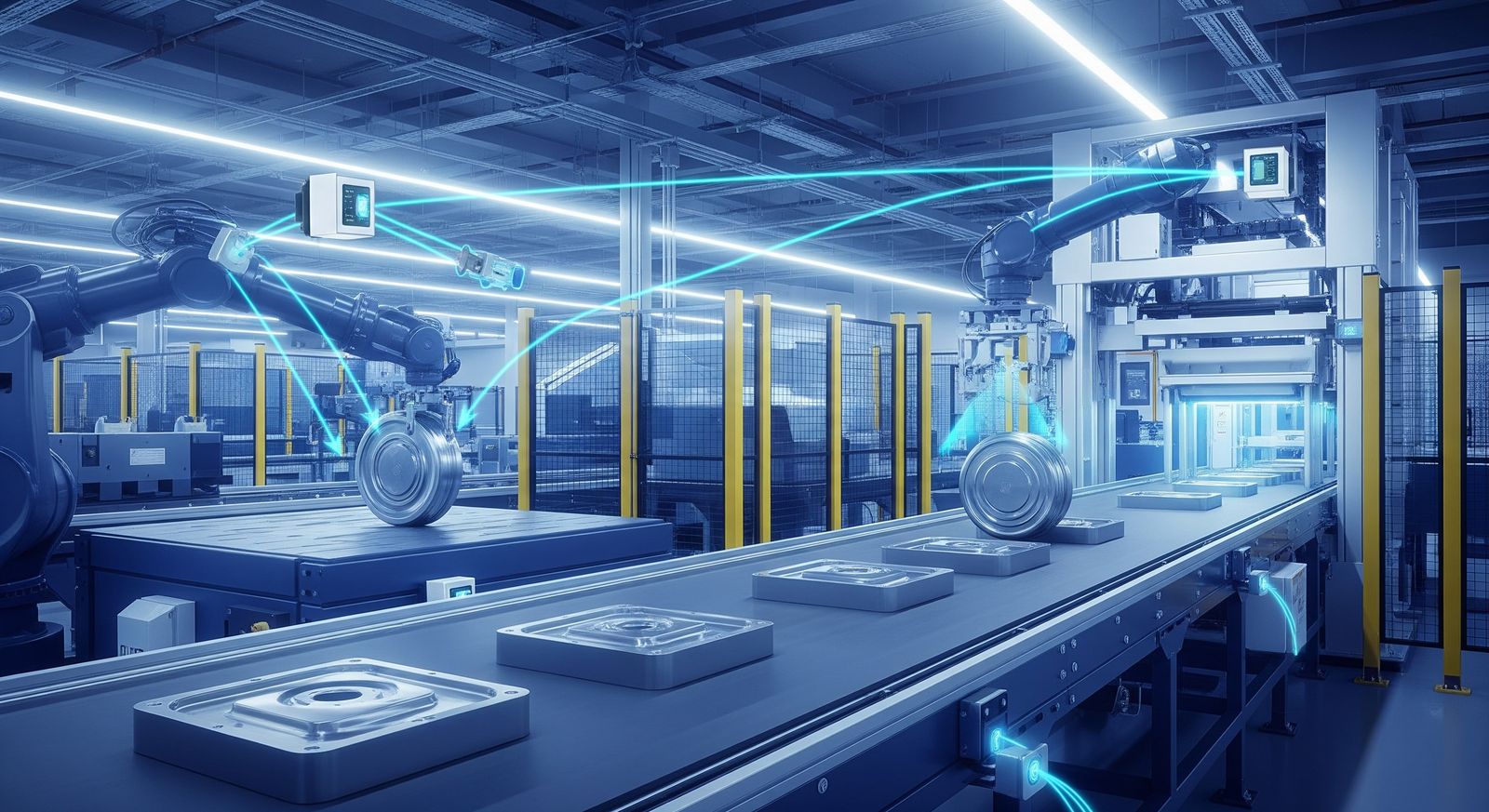
Proximity
Detects objects without contact using electromagnetic fields. Used for material handling and collision avoidance.
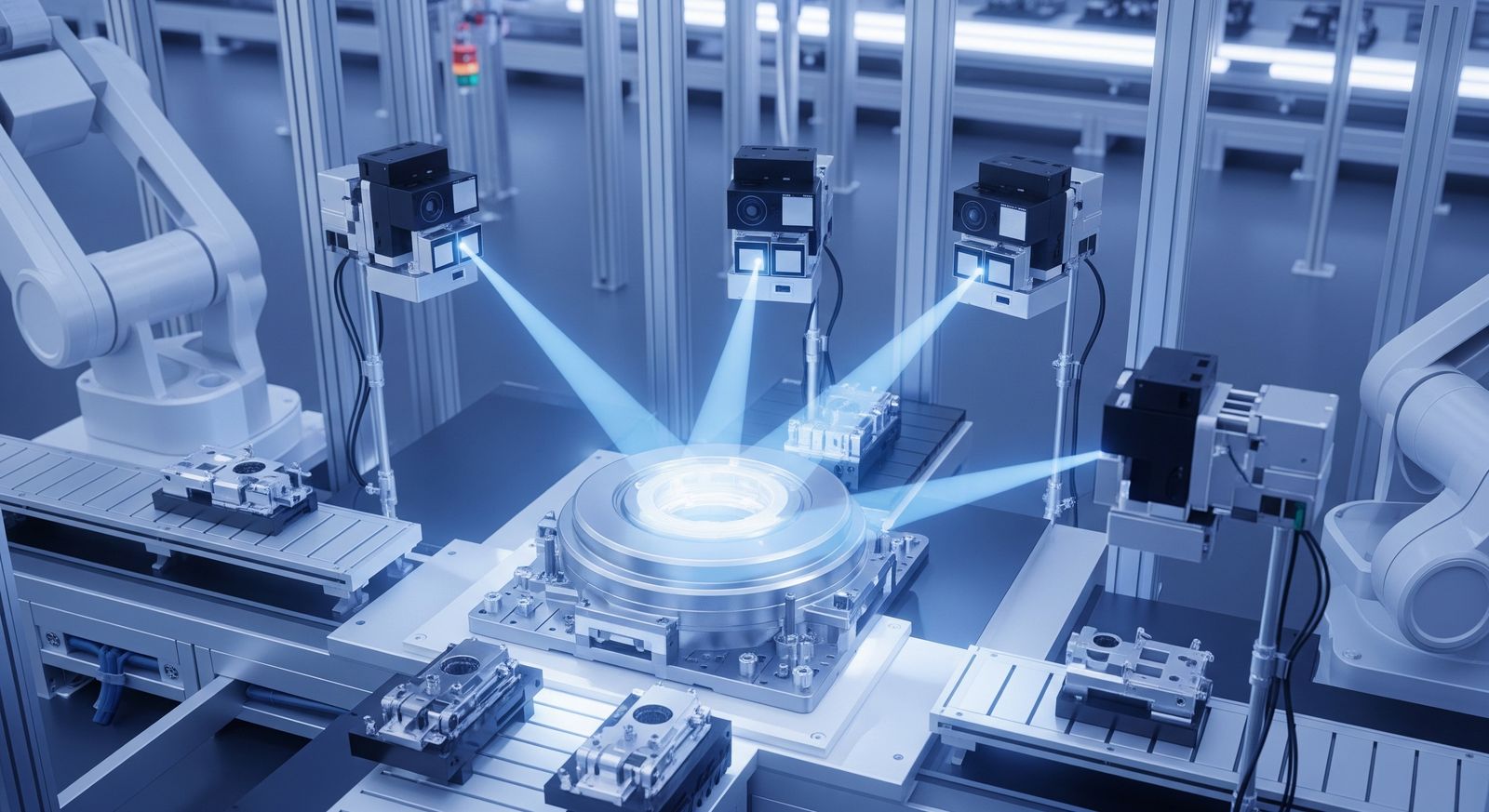
Vision
Cameras and image processing inspect objects, verify positions, and identify parts — vital for quality control.
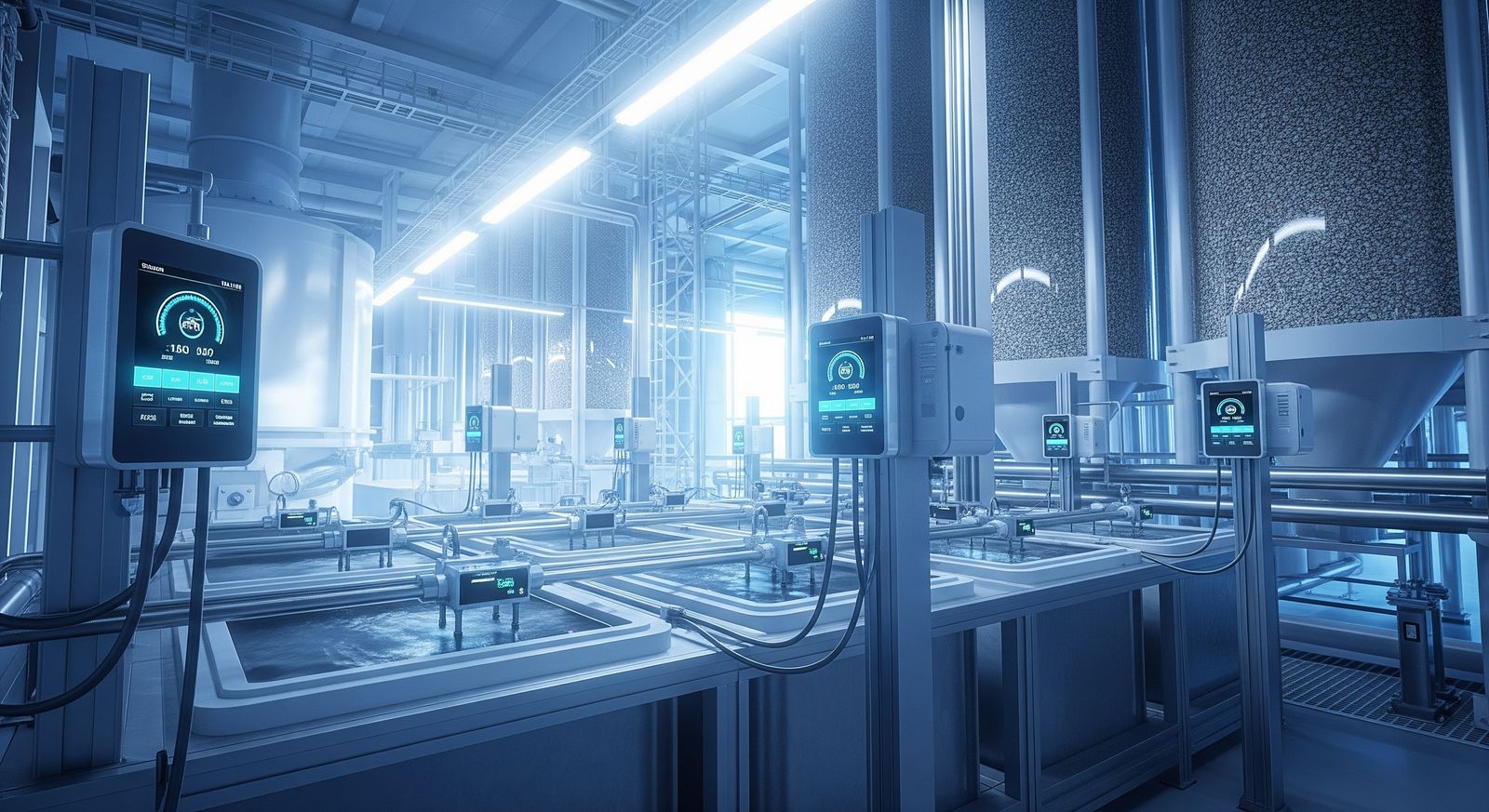
Level
Monitors levels of liquids and granular materials in tanks and silos, ensuring continuous supply.
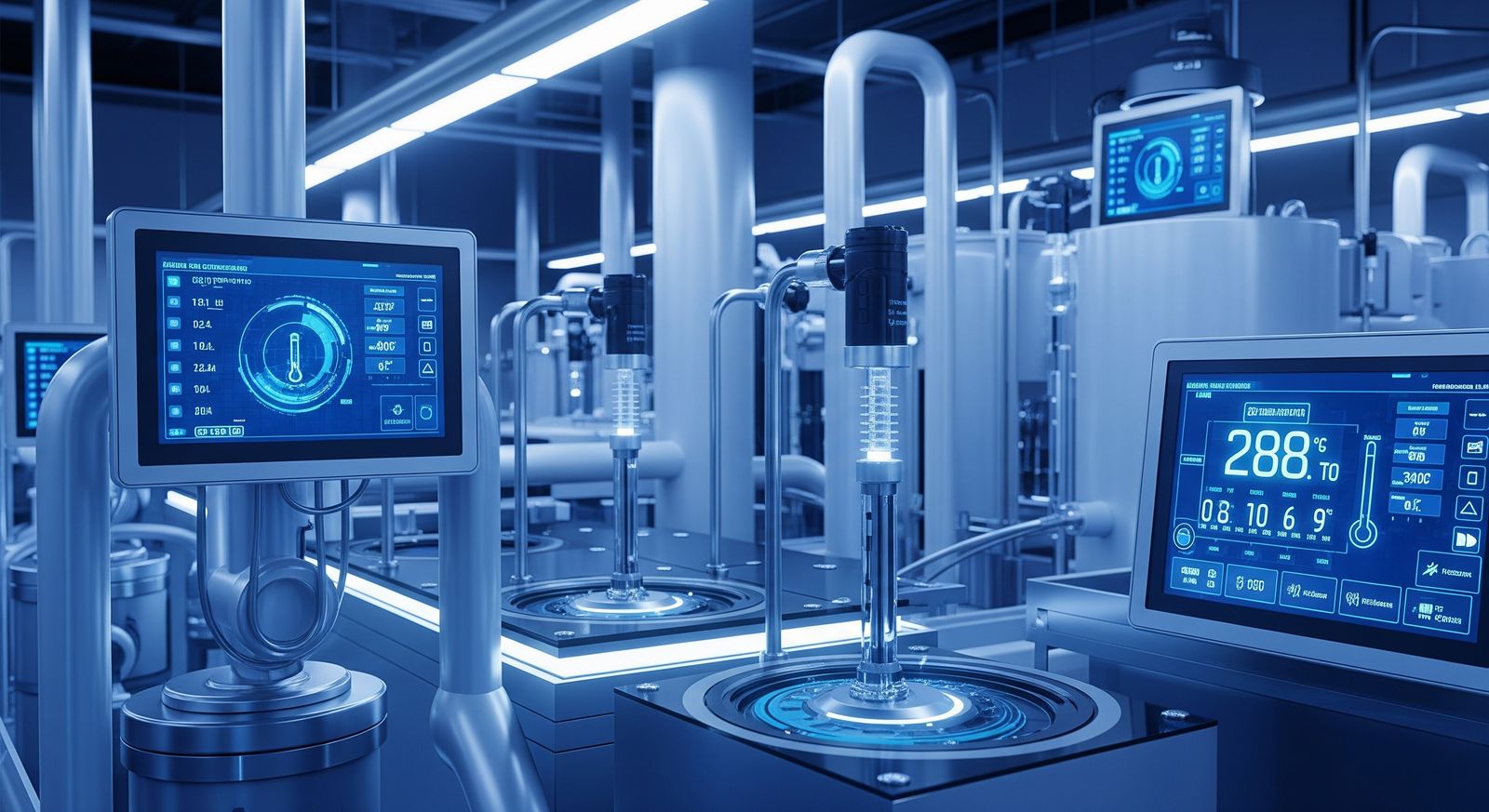
Temperature
Thermocouples and RTDs monitor and regulate temperature for process and environmental control.
Pressure
Tracks pressure in hydraulic, pneumatic, and HVAC systems — useful for monitoring and leak detection.
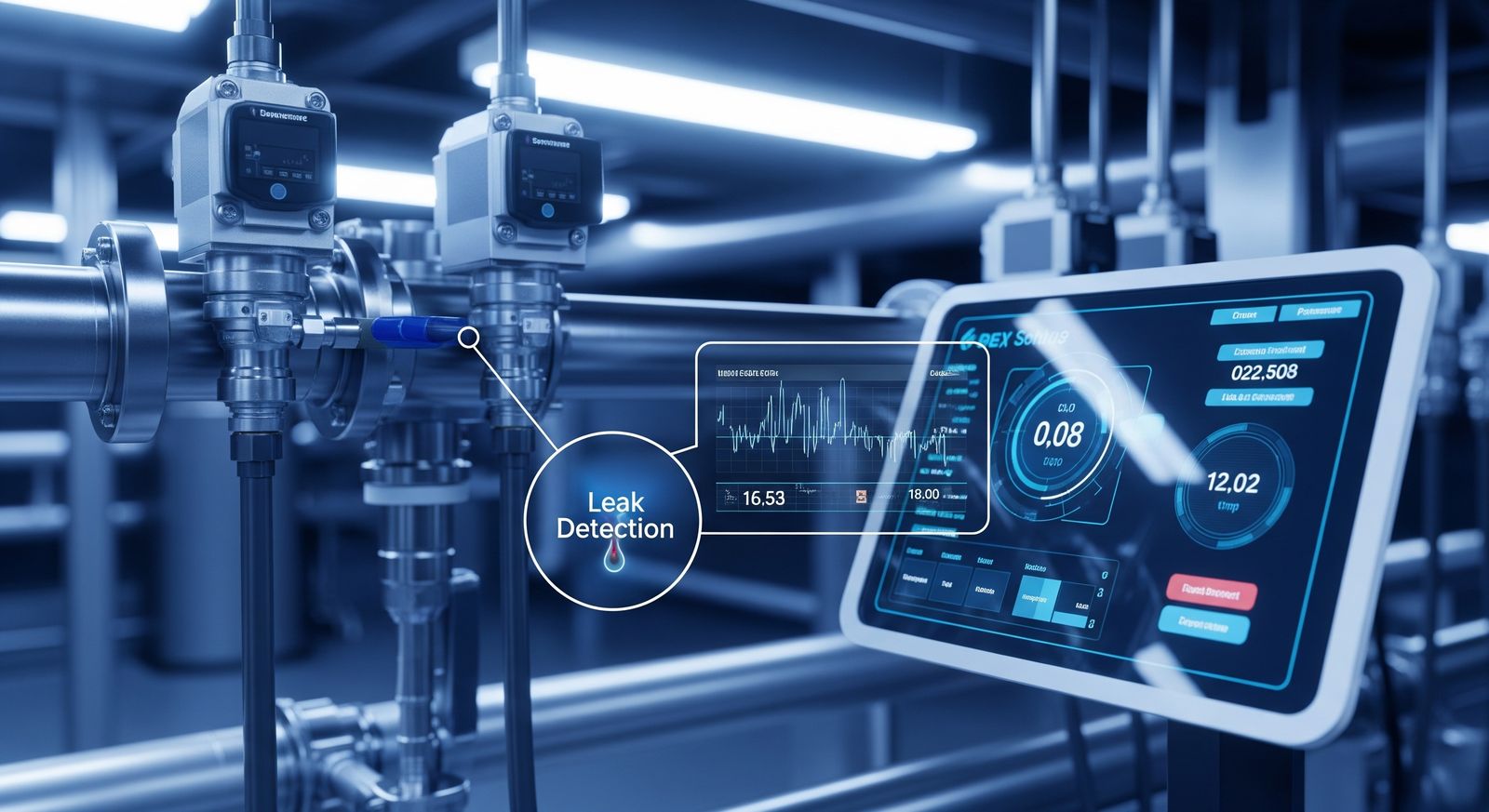
Flow
Monitors and regulates the flow of gases and liquids in continuous production.
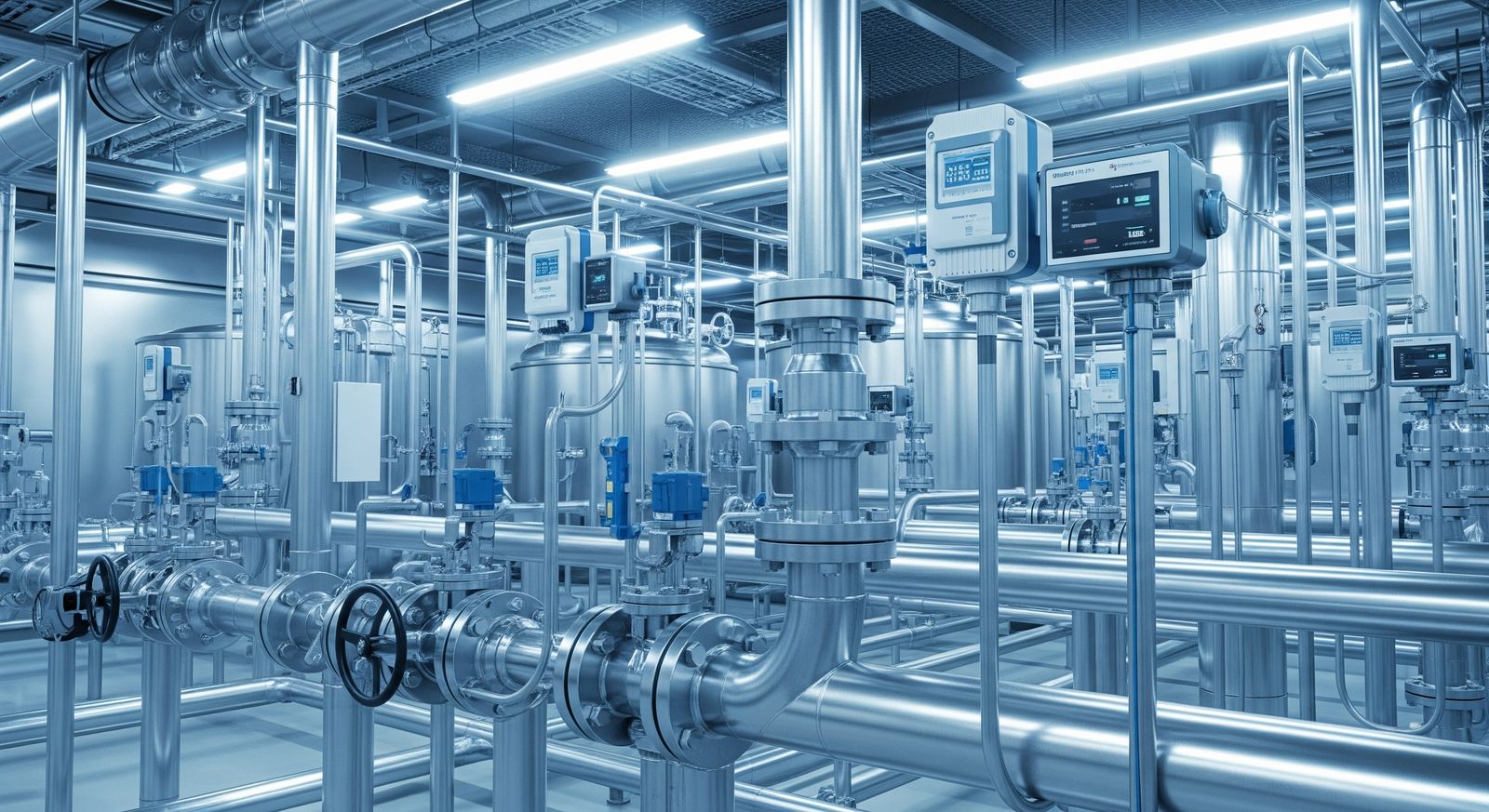
Force & torque
Measures mechanical loads in robotic assembly and machine monitoring.
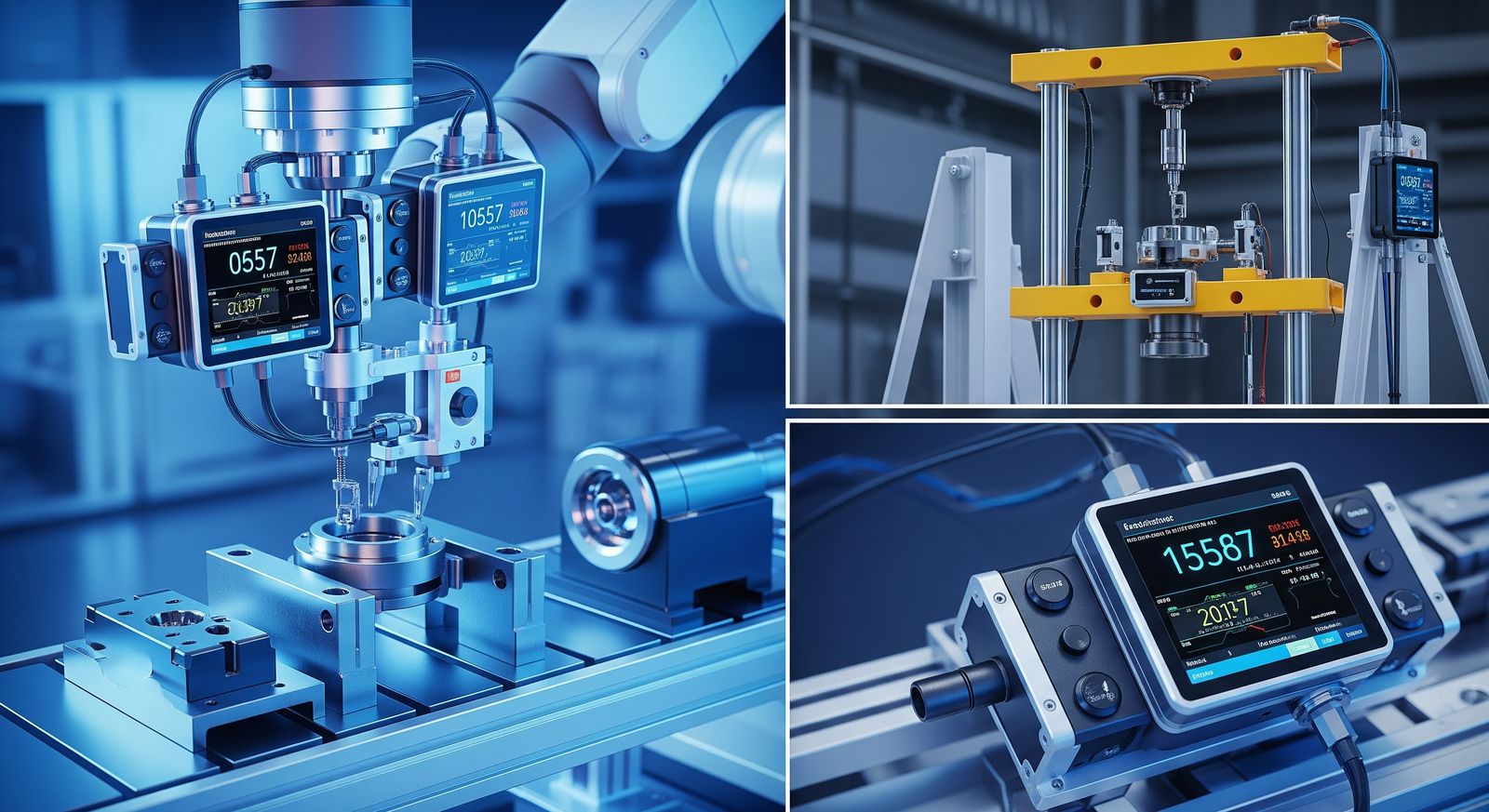
Gas & chemical
Monitors for harmful substances, typically integrated into safety systems.
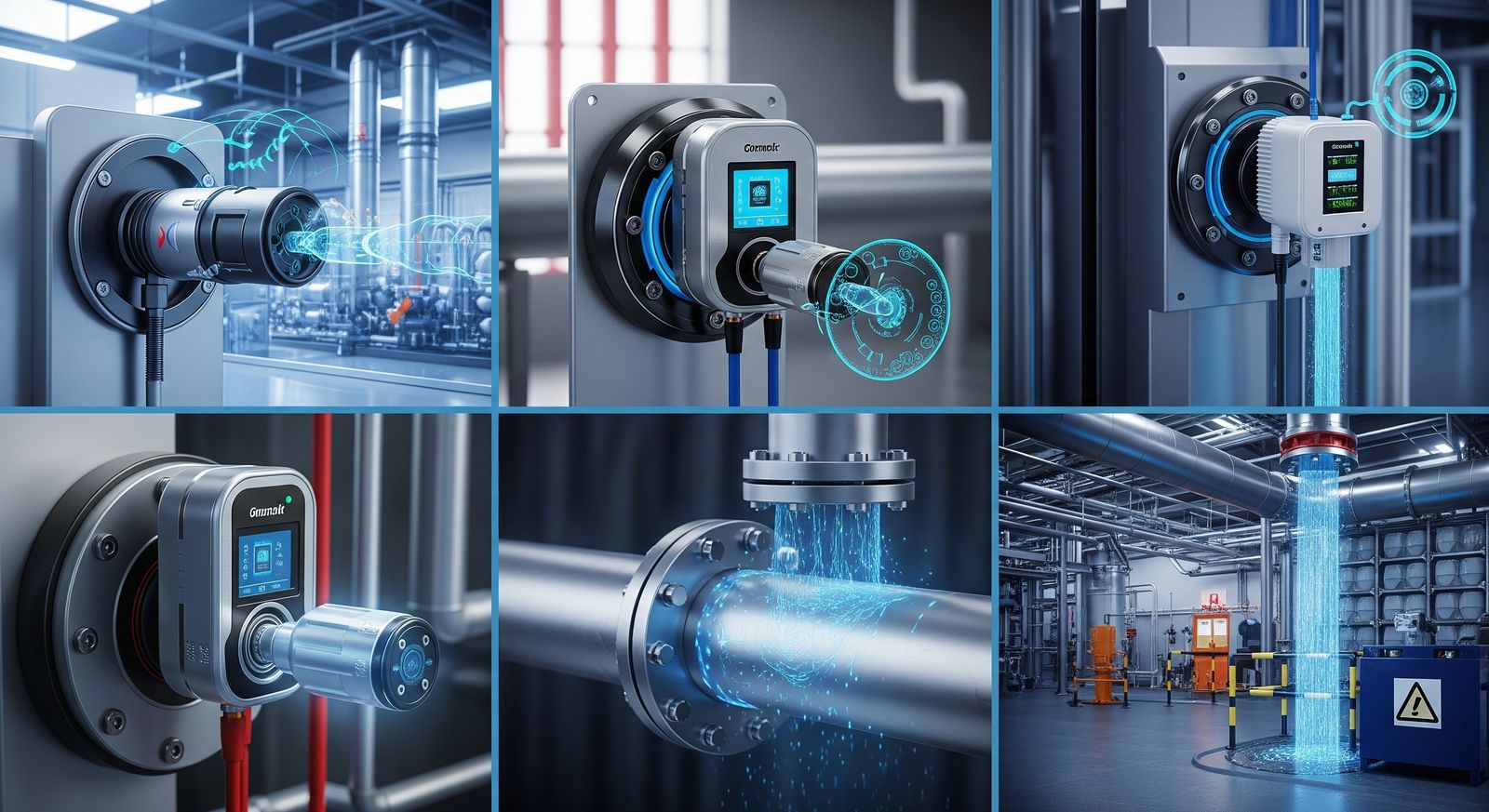
The role of IIoT
The Industrial IoT connects sensors and machines to network and exchange data, enabling centralised analysis and control — optimising production, improving supply chains, and enabling predictive maintenance.
Data acquisition & real-time monitoring
Robust systems collect, process, and analyse sensor data for immediate insight — proactive decisions, better quality control, and streamlined production. Wireless sensing adds deployment flexibility.
Tactile sensors: a sense of touch
Tactile sensors mimic human touch — detecting contact, pressure, force, vibration, temperature, and texture. They are central to safe human-robot interaction and dexterous robotics.
Sensing mechanisms
- Piezoresistive
- Capacitive
- Piezoelectric
- Triboelectric
- Magnetic
- Optical
Roles & benefits
- Safe human-robot interaction
- Precision handling of delicate objects
- Collision detection
- Object recognition — shape, material, texture
- Improved grasping stability
- Fewer defects in assembly
Where research is heading
Work focuses on higher spatial resolution, real-time feedback, and multimodal sensing — force, pressure, vibration, and temperature at once. Prototype fingertips now detect forces as small as one millinewton, approaching a human-like sense of touch.
Sensor data for maintenance and optimisation
Continuous monitoring gives insight into equipment health and performance, allowing proactive intervention.
Predictive maintenance
Tracking bearing vibration or temperature drift flags declining performance before failure. AI/ML models find the patterns — for example, differential-pressure sensors predicting filter changes.
Real-time process optimisation
Analysing temperature, pressure, and flow allows automated adjustments for efficiency and quality — a thermal controller trimming conveyor speed for consistent heat treatment.
Energy & sustainability
Monitoring electricity, fuel, and water reveals inefficiencies the factory can correct — adjusting motor speeds, shutting down idle machinery — toward resource efficiency and carbon neutrality.
Quality control
Vision sensors inspect for flaws; pressure and temperature sensors keep parameters within limits. AI-powered visual inspection reduces errors further.
03 — Collaboration & augmented reality
Humans and robots, working together
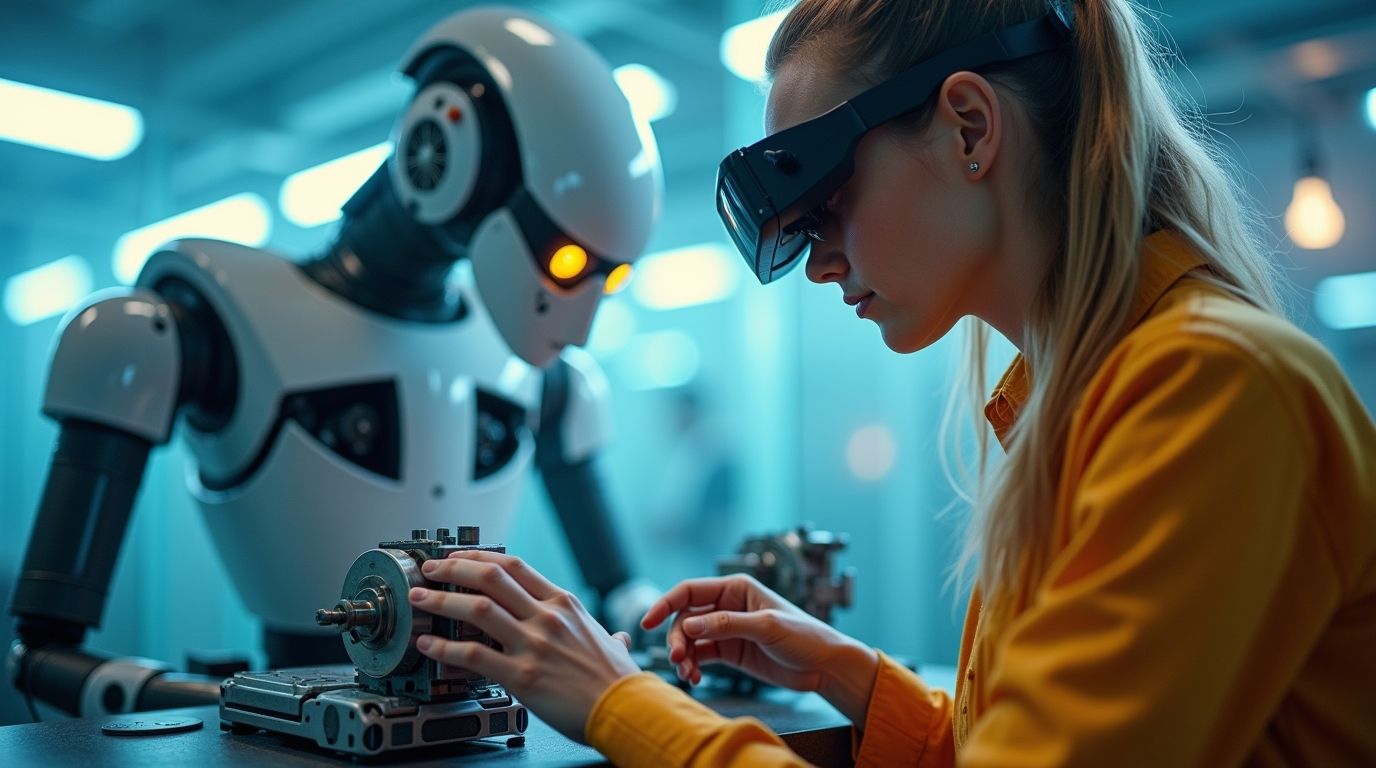
The future of manufacturing is a symbiotic partnership between people and machines. Collaborative robots — cobots — are built to work safely alongside people, with the sensors and safety features to operate in close proximity. Alongside them, augmented reality overlays digital information onto the real world for maintenance, training, and quality control. Together they play to the strengths of both.
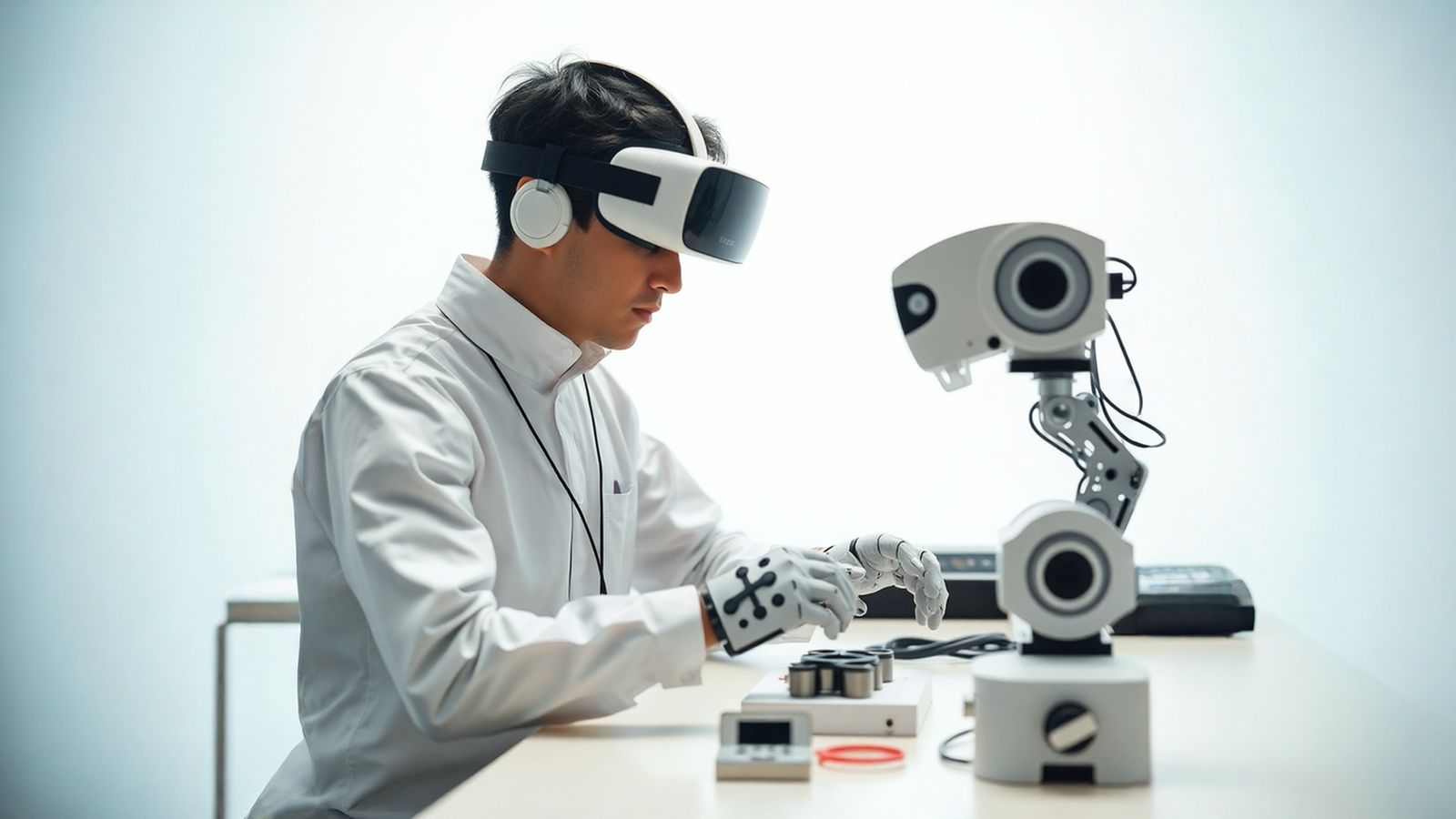
The rise of cobots
Unlike traditional industrial robots, cobots share a workspace with people. They are lighter, more flexible, and carry advanced sensors for safe interaction.
Human strengths
- Problem-solving
- Decision-making
- Creativity
- Adaptability
- Cognitive tasks
Robot strengths
- Repetitive tasks
- Physically demanding work
- Precision and speed
- Consistency
- Transport and alignment
Safety in collaboration
Safety frameworks monitor separation distance, speed, power, and force. Vision systems detect human presence and trigger slowdowns or stops; cobots sense contact and halt. AR can visualise robot workspaces and collision zones to make the risk legible.

Bridging physical and digital
AR overlays instructions, data, and 3D models onto the operator’s real-world view — real-time assistance for working with robots and processes.
Guiding complex tasks
Step-by-step visual instructions for assembly, maintenance, and inspection via smart glasses or tablets — fewer errors, schematics overlaid on the equipment, no paper manuals.
Training & simulation
Immersive, interactive learning for complex processes without risk of injury or equipment damage.
Quality control
Digital annotations and colour-coded indicators overlaid on products make defects obvious, with real-time measurement against design specs.
Remote assistance
Remote experts see what on-site technicians see and guide them through procedures — faster diagnosis, less downtime, lower travel cost.
AR and AI together
AI gathers frontline data; AR contextualises it through hands-free interfaces, so operators can act on AI insight where the work is.
Real-world impact
Several manufacturers have deployed AR at scale. The chart shows Boeing’s reported results.
Boeing
AR glasses for assembly-line visual instructions. Result: 25% less production time, 40% fewer errors.
Porsche
AR to onboard assembly workers, with instructions shown on vehicle components. Result: shorter training, fewer errors.
McLaren
AR 3D car models for designer-engineer collaboration and assembly guidance. Result: better efficiency and accuracy.
Boeing: AR impact on production metrics (baseline = 100)
04 — AI & electromagnetic control
Reading the electromagnetic spectrum for commands

A forward-looking strand of Industry 4.0: using AI to interpret electromagnetic patterns for machine control — enabling non-contact interfaces by recognising signals within the EM spectrum.
Interpreting EM signatures
Machine learning can analyse complex EM signals to find meaningful patterns — models trained to recognise the signatures of specific commands or machine states, opening the door to non-contact control.
Already in use: EMC testing
AI automates detection and mitigation of electromagnetic interference. AI-enhanced receivers analyse measurement data to identify interference patterns, even in complex environments, and suggest mitigation from historical data.
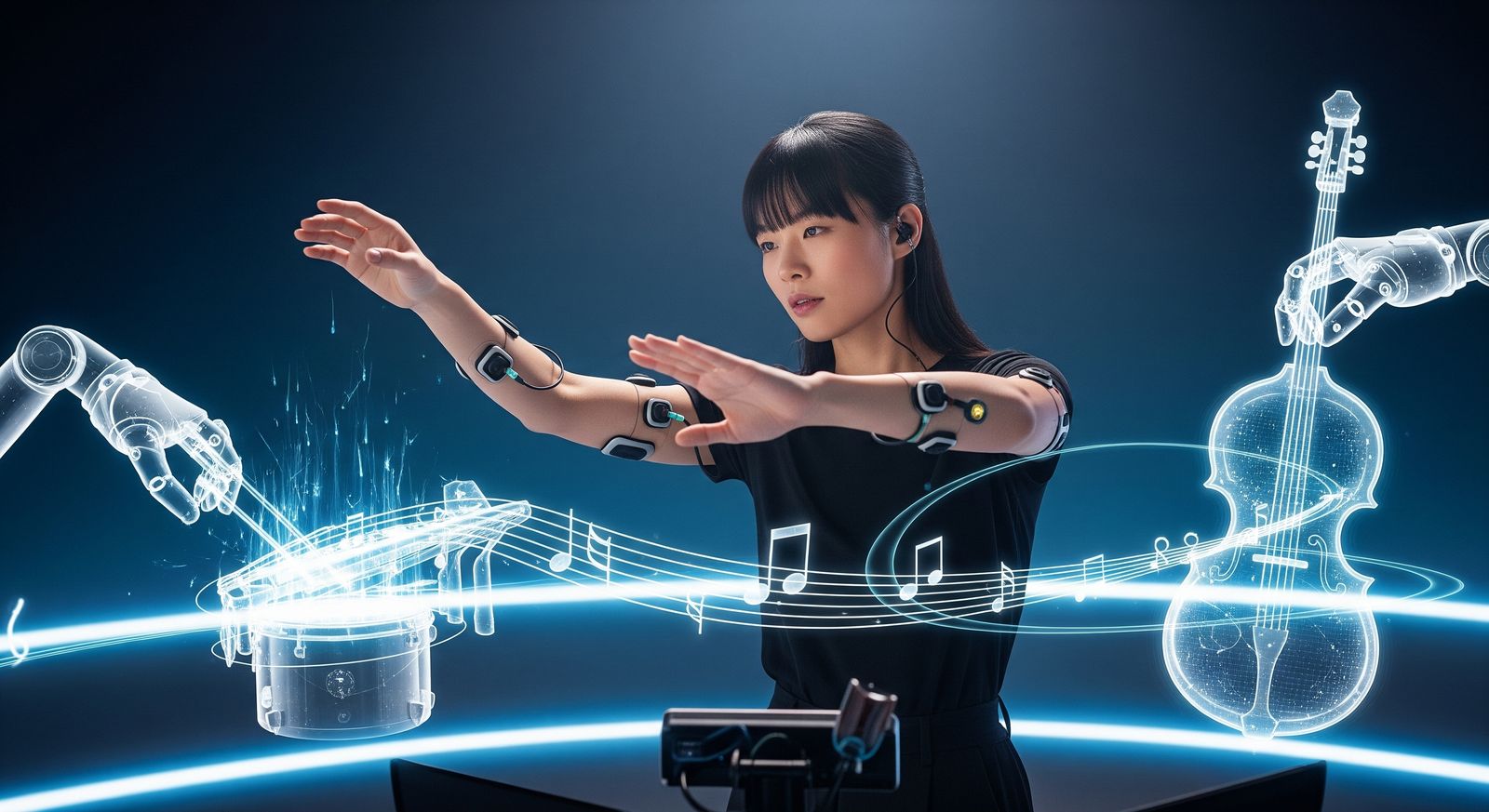
EMG as a direct interface
Electromyography non-invasively detects electrical activity from muscles through skin-surface electrodes — a direct, intuitive way to monitor muscle activity for controlling robots and equipment.
How it works
- Muscle activation is captured as EMG signals
- ML classifiers (SVM, CNN, CRNN) map patterns to actions
- Used in prosthetics, rehab robots, and increasingly industrial automation
Challenges
- Inherent variability and noise in EMG
- Needs robust signal processing
- Sophisticated algorithms for reliable control
Ambient EM fields & radio waves
Beyond direct interfaces, future automation might use ambient EM fields and radio waves for non-contact control.
Ambient magnetic fields
Anomalies in indoor magnetic fields support robot localisation and mapping in GPS-denied areas — a magnetometer-equipped robot estimating its pose and building a map.
Radio-frequency sensors
RF sensors use radio waves for non-contact detection, ranging, and monitoring — proximity, motion, RFID asset tracking, and wireless factory communication.
Remote control via radio
An established practice: operators control machinery from a safe distance, a transmitter sending commands to a receiver on the machine.
Future concept: AI & ambient EM noise
A nascent idea — robots recognising patterns in existing industrial EM noise, or intentional signals from wearables, as commands interpreted by AI, with no dedicated device.
Challenges and opportunities
Key challenges
- Commands vs noise: industrial environments are electromagnetically noisy; robust AI must filter it and find true control patterns.
- Security: wireless EM control needs encryption and authentication; research shows AI models themselves can be vulnerable to EM analysis.
Opportunities
- New interfaces: hands-free, non-contact control.
- Hard environments: valuable in cleanrooms or wherever hands must stay free.
- Collaboration: potential to reshape how people and machines interact.
05 — Societal impact
Implications, and the path forward
Industry 4.0 brings efficiency and sustainability, but also real questions about the workforce, ethics, and data privacy. These need deliberate answers.
Workforce impact
Automation of repetitive tasks changes jobs and demands reskilling toward digital literacy and critical thinking. New roles emerge in data analytics, cybersecurity, AI, and digital transformation.
Sustainability
Smart sensors and AI enable efficient energy and resource management — greener technologies, less waste, lower environmental impact.
Ethical considerations
Vast data exchange makes privacy and security paramount, and algorithmic bias in AI decisions has to be addressed for fairness and transparency.
The path forward: collaboration
Industry, academia, and government need to work together — ethical guidelines, standards for data privacy and security, and workforce-development programmes — to maximise the benefit while managing the risk, toward an efficient and human-centric manufacturing future.
06 — Outlook
Shaping the future with intelligent integration
Advanced sensors provide the data. Human-robot collaboration — with AR and tactile feedback — builds the synergy. AI-driven EM recognition points to genuinely new interfaces.
Anticipated advancements
- Sensors: more intelligent, smaller, multimodal.
- Augmented reality: more immersive, blending physical and digital seamlessly.
- AI algorithms: more sophisticated interpretation of complex EM signals for reliable, secure non-contact control.
The future of industry lies in converging these technologies into more intelligent, efficient, and human-centric environments — which is exactly where BIOLAIGY is aimed.